
Choice of Weapons
How to Write? Longhand on paper? Typewriter? Word Processor? Scrivener or Obsidian? Each medium comes with consequences

I’m starting a new novel. This one will be a honker, despite a rumour that the publishing industry wants short books (due to high paper costs, apparently, or maybe the modern readership’s short attention span). I’m looking forward to the deep dive and intense focus needed to get it done.
So, where to start? Your approach to long writing will be different than mine. In either case, how we work is going to be partially (maybe even greatly) influenced by our tools. I’m in the midst of picking the right ones for this project, so it’s a good time to lift the hood and show off the engine.
Two points worth mentioning before I dive into the details:
I’ve been publishing for 48 years, and started long before word processors were a thing. So my toolkit has evolved, and continues to do so.
I reinvent my process for each major project. There is no one way to write a novel. You don’t learn how to do it and then stamp them out like cookies. —Or, you might, but you won’t develop much as a writer if you settle. By not settling, you match your creative process to the world and characters you’re developing.
Here’s where a little McLuhan goes a long way. To some extent, your writing medium is your message. Each tool creates a separate set of constraints on your creativity. There’s that word again, it comes up over and over in these pages: constraint.
Consider, for instance, my second phase as a writer, when I moved from writing in longhand using a fountain pen to thumping away at a mechanical typewriter. (By the way, Neal Stephenson has written a great piece on longhand writing. He spends an inordinate amount of the piece talking about what kind of fountain pen to use, which will seem weird to younger readers. Trust me, if you write with a pen, this stuff matters.) Because he’s got that mode of writing covered, I won’t talk about that phase of my own practice, but go straight to the next tool.
This, for me, was the typewriter. These machines impose important limitations. If you’re writing with a standard Courier model, it’ll be producing about 250 words of text per page. This assumes double-spaced lines, a setting you use because your editor is going to want that extra space to comment on strikethroughs and other editorial marks. Margins are for margin notes, which are different.
(Incidentally, if you use classic manuscript format, your editor knows exactly how many words are in your Great Work; all they have to do is multiply your page count by 250.)
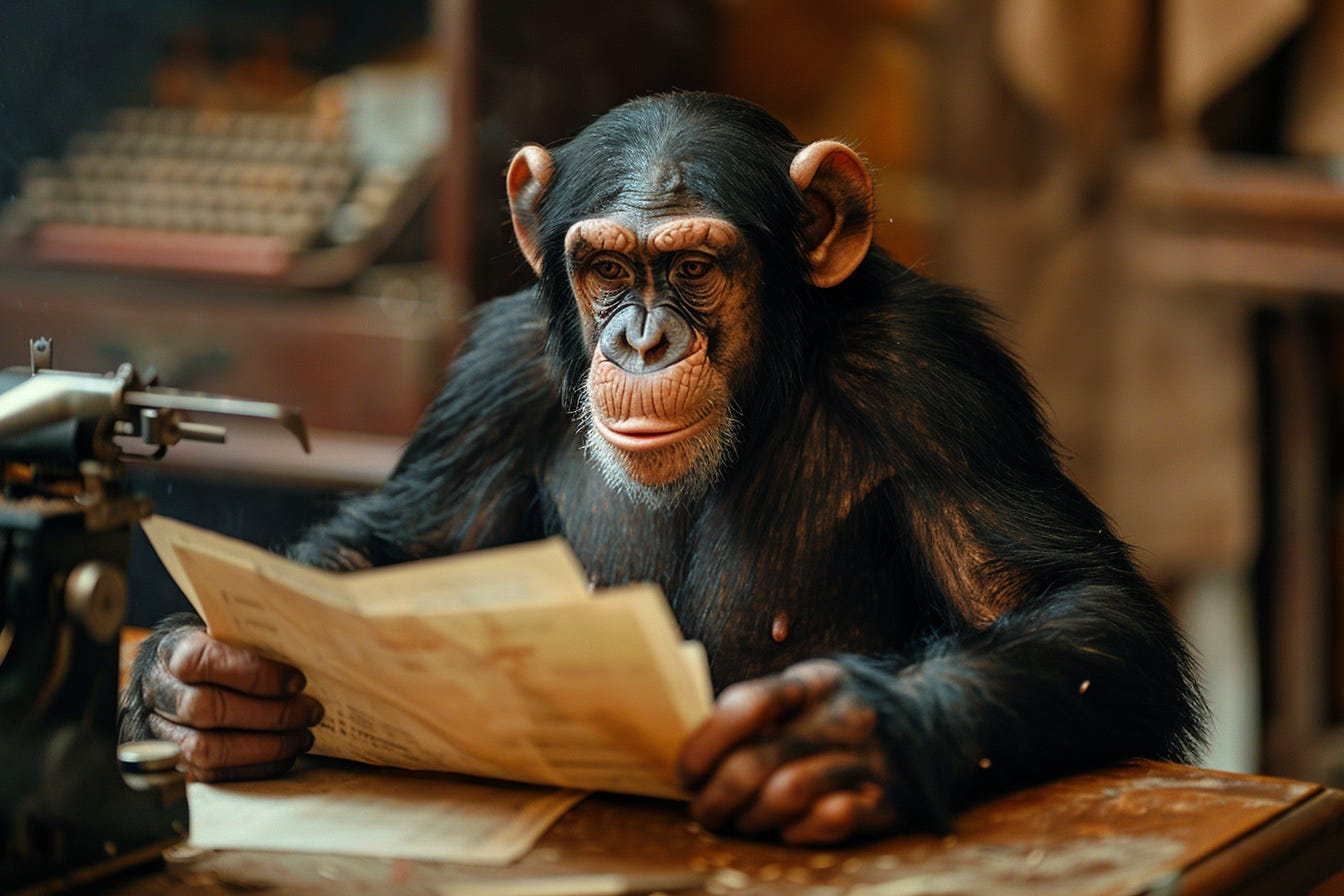
So, writing happens in 250 word blocks. You finish a page, pull it out, and insert the next one. What happens, though, is that you get tired, and sometimes your work session peters out mid-page. You can pull the paper out and reinsert it tomorrow to continue. But I found an interesting alternative that kicked up my productivity by a ridiculous amount. It was simple: if I was getting tired, I would write to the end of a page. Frequently you’ll find yourself midway through a sentence at that point. You’d think this would be a problem—the impulse is to put in a new sheet and finish the thought.
But don’t do that.
I found that in the morning, the act of inserting a new sheet and finishing the sentence from yesterday kickstarted the session. I’d finish the thought and then, because I’d been forced to remember where I was and what I’d been doing, I’d just keep going, naturally, without any of the usual procrastination (“why, look, the oven needs cleaning! I’d better do that.”) The constraint of the physical paper’s length turned out to be a powerful creative spur.
I’ve had to invent new ways to get that spur since moving to the computer. At first, I used to print every day’s work (the dot-matrix printer being the tool of choice there). Then, as my starting ritual the next day, I would take a pen and copy-edit the previous day’s output. The act of editing reminds you of what you were doing and what you had planned, and again, will naturally lead you to sit down at the computer and add the changes you made on the paper. That, in turn, leads to the act of adding that crucial next sentence, and then the one after, and you’re off and running.
Switching to a typewriter from longhand means changing the unit of work—from an unbounded set of notebook pages, to discrete 250-word chunks. The unit of work is intimately connected to your unconscious unit of expression. These units are nominally the word, the phrase, the sentence, the paragraph, the scene, the chapter and act, and ultimately what Northrop Frye calls the dianoia or totality of the work. (This combines both its Aristotelian techne, or plan, and your phronesis, or actual implementation of that plan). You should be able to hold the dianoia of the work in your mind, though for seldom completely or for long with big projects. I’ll come back to that idea, but for now let’s just note that each of us becomes an expert at crafting one or more, but seldom all, the units. And different writing media foreground different units.
For example, the fact that Neal Stephenson writes longhand using a fountain pen goes a long way to explaining why for him, the paragraph is the outstanding unit of expression. That medium lends itself to holding the crafting of the present paragraph front-of-mind, because messing it up means messy revisions or rewrites. A longer period of contemplation is required before writing a given word, and writing that word requires more labour and time than typing it. The fact that this slows you down is a good thing. It gives you time to connect your phronesis to your techne (sounds dirty when I put it that way).
Since writing is rewriting, it’s also important that the scope of your revision process changes, too, when you move from handwriting to typing. In this case, you’re shifting from an essentially free-form collage method of putting scenes and acts together, to an inherently linear model (you are numbering your pages, aren’t you?). When I made the switch, I became a slave to the page number and remained so until I started using Scrivener as my main writing tool. More about that in a bit, too.
Writing With Computers
You’d think that computers would be superior writing implements. They certain make many of your writing processes faster and easier. As Stephenson points out in his post, though, faster and easier are not the same as better. You should view computers as a tool of convenience, rather than something that you need, or even something that will improve your work. —That’s not to say they can’t, but you have to know the particular inflection points where their affordances work in your favour, and avoid those that can actively make your work worse.
Working backwards from AI (which is not your writing at all, so doesn’t count), we have auto-correct and auto-suggest, which I encourage you to turn off. You don’t want the system to be anticipating your next word; it’ll always go for the most likely one, flattening your style in the process. Same with grammar checkers; they may help you produce prose that’s technically correct, but who gives a damn about being technically correct? You’re trying to communicate, and do it in your voice, not that of Webster or some syntax faceless authority. Here it’s useful to consider again your unit of expression. You can write incoherent prose on the sentence level that becomes perfectly legible storytelling at the paragraph or scenic stage. William S. Burroughs, Alain Robbe-Grillet, and James Joyce all displaced the unit of meaning. Burroughs used the cutup method to break the semantic content of individual sentences and paragraphs, shifting the unit of meaning up a level (or two). Alain Robbe-Grillet, in works such as Project for a Revolution in New York, weaponized point-of-view at the paragraph level, similarly shifting the unit of meaning up to the scene or above. And in Finnegans Wake, Joyce attacks the word itself. Wake is a book that makes perfect sense if you read it aloud, drunk, and in an Irish accent. —I’m not kidding: he’s shifted the unit of meaning to the level of the performance of the work. By making this shift, he’s able to communicate in ways that are simply not available to the standard units of expression.
Armed with this idea and the McLuhanish notion that your writing medium is, to a great extent, your message, we can productively compare different approaches to writing with a computer. (Note that I say with, not on. On implies that your work rests upon the machine; with suggests it converses with the machine but is independent of it.)
To start with, we have classic ‘word processors’ such as Microsoft Word, WordPerfect, or more recently, OpenOffice and its offspring LibreOffice Writer. Just as the graphical user interface used a desktop metaphor, these word processors use the typewriter-page metaphor to constrain your unit of work. This is hugely consequential, both for good and ill. In my case, they made the transition from the mechanical typewriter easy. By formatting the text in Courier 12 pt., ragged right and double-spaced with an 8 1/2 by 11 inch page with one-inch margins, I could bring over the habits I’d already developed, as well as the unconscious affordances, such as automatic word counts in my head based solely on page count. Watching the page count rise day after day provided a boost to morale. And at any time I could print an exact duplicate of what was on the screen, to edit by hand.
During this phase (when I wrote my first to fourth published novels, in the early oughts), my habit was still to print out each work session and do markup by pen on the couch in the evening or before the next day’s start. I could be very productive this way.
These systems do nudge you (strongly) in the direction of one unit of expression. On the other hand, unlike the collage approach of handwritten notebooks (and of the program Scrivener), they constrain you to think more musically, in the sense of the work being literally one long line of words (like notes). When you ignore or escape the page metaphor (for instance by switching to Web view in LibreOffice Writer) a long-form piece, such as a novel, becomes a single performance, where the whole thing is your unit of expression. I wrote several books in OpenOffice specifically for this affordance, and I found it makes a big difference. At every moment you are working on the whole thing (at least potentially), making it easier to cast forward and back, insert foreshadowing, harmonize motifs and descriptions, and follow character arcs.
These are all good qualities of the traditional word processor. And then there’s Scrivener.
The Container Metaphor
Literature and Latte’s project-management and writing tool, Scrivener, has become a standard system for novel writing, at least among the authors I know. There is simply nothing like it, in that it was not conceived as a word processor, but as a composition workshop. I’ve written award-winning fiction, including a bunch of novels, using it. It’s an essential part of my workflow.
At the same time, I’ve always been aware that Scrivener too imposes constraints. They’re subtler than standard word processors’ but no less important. My most maddening beef with it has always been that it has no proper bookmark function; you can at best point to entire files, but bookmarks are only useful when they tag individual words or phrases. All the while I’ve been using it I’ve been just inches away from abandoning it for LibreOffice because of this one, seemingly trivial detail.
Leaving that issue aside, Scrivener is the most flexible writing tool I’ve used. You can customize it in lots of ways, and it doesn’t just contain your drafts, you can keep your notes, outlines, editorial critiques, relevant articles and even pictures and maps in your project file if you want. You can attach useful metadata to any chunk of writing, including hyperlinks; and it has a highly useful “binder” that transcends the traditional table of contents in many ways. I’m not going to try to describe everything it does; you can download the program for free from the Literature and Latte site and find out for yourself.
Remember that when I transitioned from handwriting to typing, then from typing to word processors, I encountered new sets of constraints that were both generative and limiting. The same happened when I started using Scrivener, though it took a little longer to identify them, due to the dazzle factor and the apparently seamless experience. The main constraint is also Scrivener’s main writing metaphor: the scrivening.
Unlike traditional word processors, Scrivener does not organize your writing in files, and mimic the structure of paper documents inside those. Instead, it uses nested containers: folders, and inside those, pieces of text called ‘scrivenings.’ These can be of any length, they can be dragged and dropped anywhere, and when gathered together inside a folder, can be exported as chapters in a traditional Word or Libre file. You can completely reorganize your story structure with a few mouse clicks; in fact, you can create multiple alternative orderings and flip between them at will.
This is great. If you ask what the organizing metaphor of this system is, Literature and Latte would like you to think in terms of the collage effect of longhand notebooks—that, at any rate, is the experience I think they were shooting for. When I use the program, however, the metaphor I find I’m forced into is that of containers.
Folders (chapters or parts) are containers. Inside them are further containers. Each of these word bins can be moved wherever you want, which is the beauty of the system. You can make them visible or exclude them from the final output without having to delete them. Great! But, like every other approach we’ve looked at here, this paradigm comes with some subtle nudges that train you to think about stories in a particular way.
(Another thing that Scrivener in particular encourages is note-taking, including outlining and worldbuilding. You can fill your Scrivener project with notes and synopses, character backgrounds, and on and on. Here again the word processor, or better yet, longhand, is superior—because 99% of the time, note-taking of any sort (including outlining and worldbuilding) is just a form of procrastination. Do you want to write a book? Then write a book! Keep the dianoia in your head and write until it’s been realized on the page. Any secondary documents are temporary crutches at best.)
A novel that is a single Writer or Word file presents itself as a musical score more than a set of movable buckets. The very idea that a scene could be moved is actually weird and, if you think about it, a little depressing. If it can be moved, it’s not the inevitable follower of the scene before, is it? It’s not a natural continuation of the music of the story; it’s a self-contained blob, at least to some extent. If it’s movable, that implies you made a mistake in drafting it at the point where you did; there was a disconnect between techne and phronesis.
You can get away with a little arbitrariness in story structure, but what you don’t want to do is bake it into the foundation of a writing system as its primary feature.
Contrast this to the idea of throughlines, otherwise known as story arcs. A completely different paradigm to the container one is of narrative as overlapping lines—not always timelines, but a stack of stories, if you will, that each start and end in different places, all under the umbrella of the master story. These throughlines are deterministic—they don’t have pieces that can be arbitrarily picked up and moved around—and they interact to make the whole.
I’d kill for a version of Scrivener that had proper bookmarks and respected the fact that any given scene/scrivening is ‘sticky’ to the ones before and after it; that scenes cannot just be word containers. Context matters. I want a writing tool that understands each scene to be part of a throughline, and resists or alerts me to any attempt to move it out of its context. Rather than clicking a button to create a new scene container, I’d like to click one that starts or ends a throughline—an arc.
Where I Find Myself
This time around, I began with paper and pen, building out a set of ideas in a notebook. It’s almost mature enough to graduate to a draft-writing tool. But circling back to where we started: which one to use?
If no arc-oriented writing program exists, maybe I’ll make my own. I’ve been doing some vibe coding lately, and my first experiment was to add an extension to LibreOffice Writer that lets me hide special bookmark pairs in the Writer file (as XML processing instructions, for those of you interested in the technical details). I built a separate GUI that lets me map a timeline-like chart of the different story arcs I’ve defined in the file, and it alerts me when I try to move part of an arc to a spot before its start tag, or after its end tag. Making this took me a couple of hours huddling with Claude Code.
That was a fun experiment, and it suggests that I could build on that inside Writer until I have my own fully customized storytelling machine.
That doing this could easily become a procrastination activity of its own is uppermost in my mind, though—plus the fact that LibreOffice files, while they’re just gzipped XML, are still vulnerable to corruption. I may instead build a whole toolbox full of Obsidian plugins and write in that program instead. I may run out of time and energy and default back to Scrivener, but I suspect I’m about to make a shift as big as the one from handwriting to typewriting.
Because, if you want to know the value of AI to creative writing, this is it: not as an amanuensis or editorial advisor, but rather as a tool you can use to compensate for the biases and affordances of whatever writing system you normally use. Each of them—handwriting, typing, word processing, scrivening—comes with advantages and disadvantages. Consider looking for the ways your system biases your work, not just to make you an outliner or a ‘pantser,’ but how it makes you unconsciously approach the work in a certain way, as linear throughlines, containers, collage or performance. Once you’ve identified a limitation, you have an opportunity to use AI to build tools to (at least partially) compensate for it. In my case, it’s unlikely I’ll write my own uber-customized version of Writer or Obsidian. But I fully intend to code compensations for the limitations that bug me. The aim is to maximize the ways of thinking and writing that are available to me as I work. I may start the book in Writer and finish it in Obsidian, or Scrivener; who knows? I’ll build bridging tools as I go, to make it easier for me to do the one thing that I actually want to do:
Write a better story.
—K
I keep trying Scrivener and bouncing off. Something about it runs athwart my writing brain. Then again, I write nonfiction, so I usually work with one core text editor surrounded by all kinds of tools and documents.
Maybe I should try Obsidian.
Fascinating reading! When I first started writing for real (I'm excluding the embarrassing hand-wringing poems from junior high about boys and unicorns and dreadful mothers that were written in school notebooks), I wrote almost exclusively in steno pads. If you remember those, the spiral was at the top, and there was a line down the centre of each page. The way you used them was that you wrote, then you flipped the page, and wrote on the next page (you didn't use the back of the same page). When you got to the end of the steno pad, you'd flip it over, and write on the backs of all the previous pages. Consequently, every poem I wrote was narrow and short. I felt constrained by that column divider, and also by not wanting (for some reason) to go to the next page! My poetry changed a lot when I moved to regular notebooks, the electric (memory) typewriter, and eventually computers. Funnily enough, I seem to have bypassed regular typewriters entirely, though we definitely had one in the house. I don't know if I'd have the stamina to write an entire novel longhand... then again, I've never tried it! Mind you, I've got a bit of mild stiffness and arthritis in my writing hand now, so that elderly ship may well have sailed.
BTW, Robert B. Parker wrote hilariously of Finnegans Wake in his book, All Our Yesterdays:
"Did you ever read Finnegans Wake?"
"Not all the way through."
"James Joyce didn't read it all the way through."
Which made me laugh and laugh.